
IGEMS ANSWERS NATIONAL CALL FOR WORK-READY ENGINEERING GRADUATES
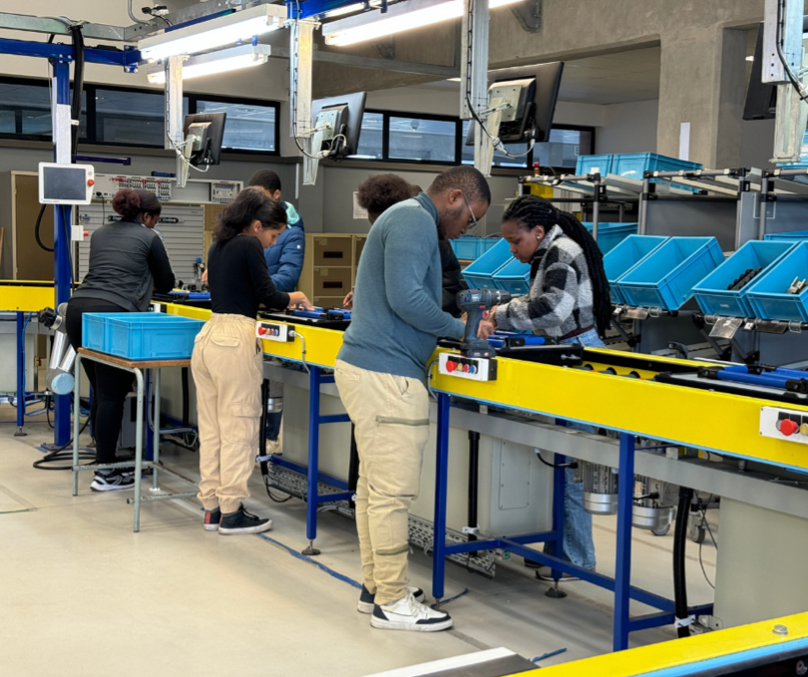
iGEMS learners taking part in an exercise at the SWEAT Lab (Simulated Work Environment) -at the NMU Department of Industrial Engineering
Gqeberha, South Africa — As South Africa’s higher education sector faces growing pressure to produce graduates who are not only qualified, but employable, Unity in Africa’s iGEMS programme is demonstrating the kind of education-to-employment model the country urgently needs.
The recently released BDO South Africa Higher Education Sector 2025 report highlights a critical national challenge: higher education must move beyond access and enrolment numbers and focus on “conversion” — getting students into the system, through the system, and into meaningful employment. The report notes that while graduate unemployment is lower than the national average, it still stands at 12.2%, pointing to a continued mismatch between qualifications and the skills employers need.
For iGEMS, this is not a future concern — it is the very reason the programme exists.
An initiative of the Unity in Africa Foundation, iGEMS supports promising young people from school into engineering-related tertiary studies and, ultimately, into the workplace. The programme is built around a structured pathway that includes academic support, work-readiness training, mentorship, workplace exposure, internships and industry partnerships.
The BDO report identifies Work-Integrated Learning as one of the most important bridges between academic preparation and workplace readiness, describing it as a structural necessity rather than a supplementary add-on. It further notes that employers increasingly look for graduates who can demonstrate problem-solving, communication, adaptability, digital fluency and the ability to apply knowledge in real-world settings.
This is where iGEMS stands apart.
Through its phased approach, learners are exposed to the realities of the engineering world before they graduate. They receive guidance from mentors, gain practical insight into professional environments and develop the personal and workplace skills needed to succeed in demanding technical fields.
“South Africa does not only need more graduates; it needs graduates who are prepared for the world of work,” said Berenice Rose, Founder and Director. “iGEMS is helping to close that gap by connecting education, industry and mentorship in a practical, measurable way. Our goal is to ensure that young people do not just qualify — they become employable, confident and ready to contribute.”
The BDO report also points to high-demand growth sectors such as ICT, renewable energy, advanced manufacturing and engineering as areas where South Africa must strengthen its skills pipeline. For a country facing persistent unemployment and technical skills shortages, programmes like iGEMS offer a practical response to a national economic priority.
By working with schools, students, tertiary institutions, engineering firms and funders, iGEMS is creating a pipeline of young talent equipped for both academic success and workplace impact. The programme’s model shows how collaboration between the education sector and industry can help address one of South Africa’s most urgent challenges: turning potential into employability.
“Every young person who moves through iGEMS represents more than an individual success story,” added Berenice Rose. “They represent what is possible when opportunity is matched with structure, support and industry commitment.”
As the higher education sector continues to grapple with funding constraints, skills mismatches and uneven graduate outcomes, iGEMS provides a timely example of how targeted, partnership-driven programmes can help prepare the next generation of engineering professionals.
For more information about iGEMS and Unity in Africa, visit www.uina.co.za.